
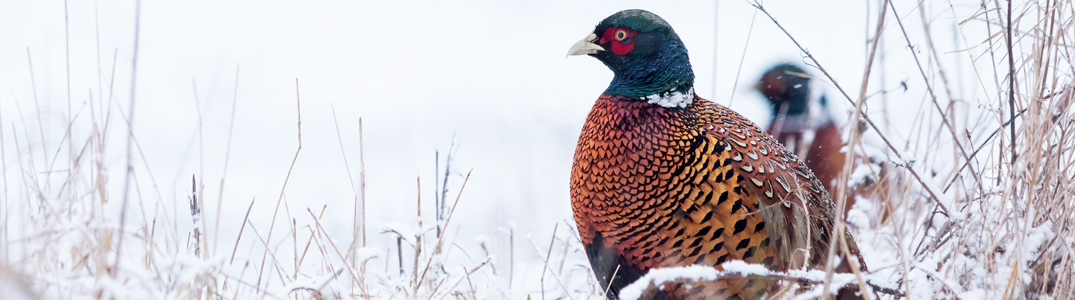
Winter is the most demanding season in the annual lifecycle of the ring-necked pheasant. In southern Alberta, where prolonged cold, wind, and snow are common, winter survival often determines whether local pheasant populations persist into the following spring. Unlike migratory birds, pheasants remain on the landscape year-round and must rely entirely on available habitat and food resources to endure the winter months. Understanding these winter-specific needs is critical for effective habitat management and conservation.
The single most important factor for winter pheasant survival is secure thermal cover. Pheasants require dense vegetation that protects them from wind, drifting snow, and extreme cold. Without adequate cover, birds rapidly lose body heat and expend precious energy reserves.
The best winter habitat includes cattail marshes, reed beds, dense grass stands, shelterbelts, brushy coulees, and willow thickets. Cattail wetlands are especially valuable because they trap snow, reduce wind exposure, and provide overhead concealment from predators.
In agricultural landscapes, shelterbelts and unharvested field margins often serve as the last remaining refuges once crops are harvested.
Roosting sites must be close to food sources. When pheasants are forced to travel long distances across open, snow-covered ground, they become highly vulnerable to predation and energy depletion. Landscapes that offer connected patches of cover and food consistently support higher winter survival rates.
During winter, pheasants rely almost entirely on high-energy plant foods. Waste grain from harvested fields, particularly wheat, barley, oats, and corn, forms the backbone of their winter diet. These grains provide the calories needed to maintain body temperature during prolonged cold spells.
Conservation efforts by Pheasants Forever play a major role in providing habitat for this vital period of the life cycle.